Plant Finder

Soledad Purple Hawaiian Ti Plant
Cordyline fruticosa 'Soledad Purple'

Height: 6 feet
Spread: 3 feet
Sunlight:


Hardiness Zone: 9a
Other Names: Good Luck Plant
Description:
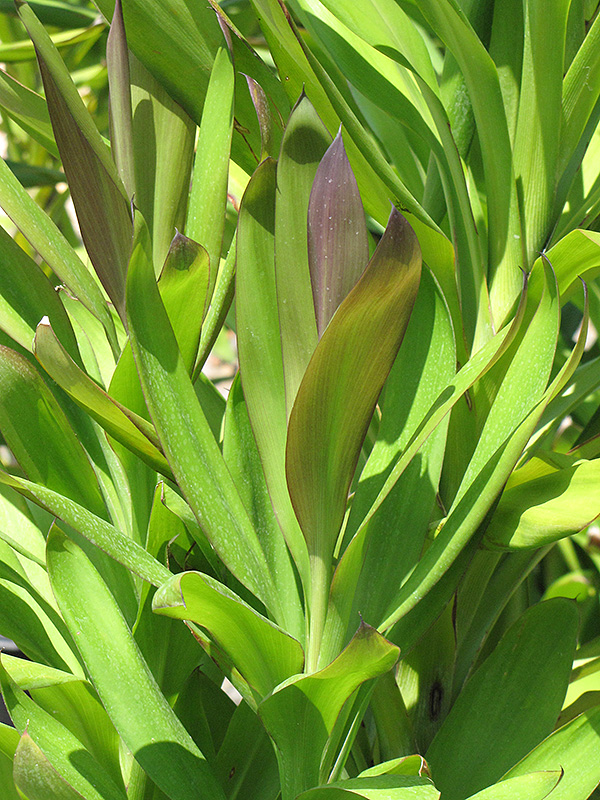
Young leaves on this variety emerge dark reddish-purple, then gradually mature to bright lime green; spectacular when massed on the landscape; perfect for adding a lush, tropical look to patio borders
Ornamental Features
Soledad Purple Hawaiian Ti Plant features subtle shell pink flowers with white overtones along the branches from late winter to early spring. It has attractive lime green evergreen foliage which emerges deep purple in spring. The sword-like leaves are highly ornamental and remain lime green throughout the winter. It produces black berries from mid to late summer.
Landscape Attributes
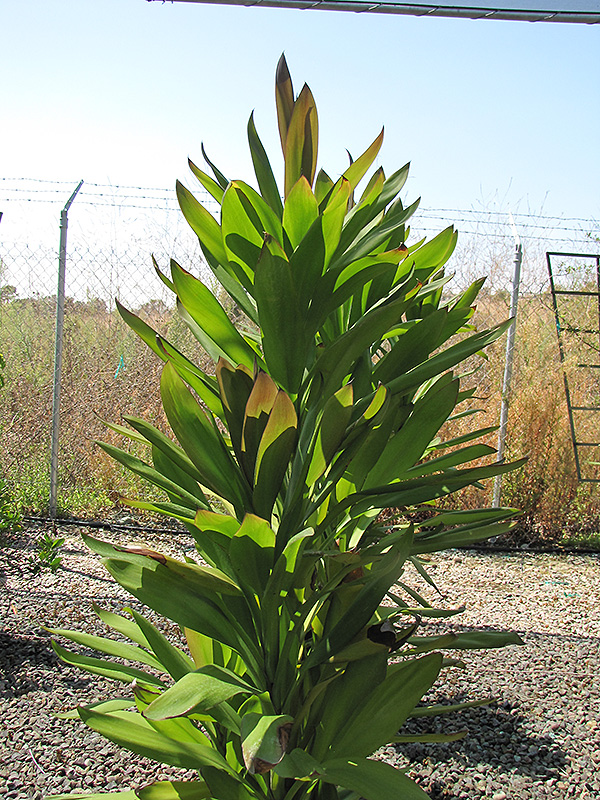
Soledad Purple Hawaiian Ti Plant is an open multi-stemmed evergreen shrub with an upright spreading habit of growth. Its relatively coarse texture can be used to stand it apart from other landscape plants with finer foliage.
This shrub will require occasional maintenance and upkeep, and should never be pruned except to remove any dieback, as it tends not to take pruning well. It has no significant negative characteristics.
Soledad Purple Hawaiian Ti Plant is recommended for the following landscape applications;
- Accent
- Mass Planting
- Hedges/Screening
- Container Planting
Planting & Growing
Soledad Purple Hawaiian Ti Plant will grow to be about 6 feet tall at maturity, with a spread of 3 feet. It has a low canopy with a typical clearance of 1 foot from the ground, and is suitable for planting under power lines. It grows at a medium rate, and under ideal conditions can be expected to live for approximately 10 years.
This shrub does best in full sun to partial shade. It does best in average to evenly moist conditions, but will not tolerate standing water. It is not particular as to soil type or pH, and is able to handle environmental salt. It is somewhat tolerant of urban pollution. This is a selected variety of a species not originally from North America.
Soledad Purple Hawaiian Ti Plant makes a fine choice for the outdoor landscape, but it is also well-suited for use in outdoor pots and containers. With its upright habit of growth, it is best suited for use as a 'thriller' in the 'spiller-thriller-filler' container combination; plant it near the center of the pot, surrounded by smaller plants and those that spill over the edges. It is even sizeable enough that it can be grown alone in a suitable container. Note that when grown in a container, it may not perform exactly as indicated on the tag - this is to be expected. Also note that when growing plants in outdoor containers and baskets, they may require more frequent waterings than they would in the yard or garden.